Yorkshire Dales
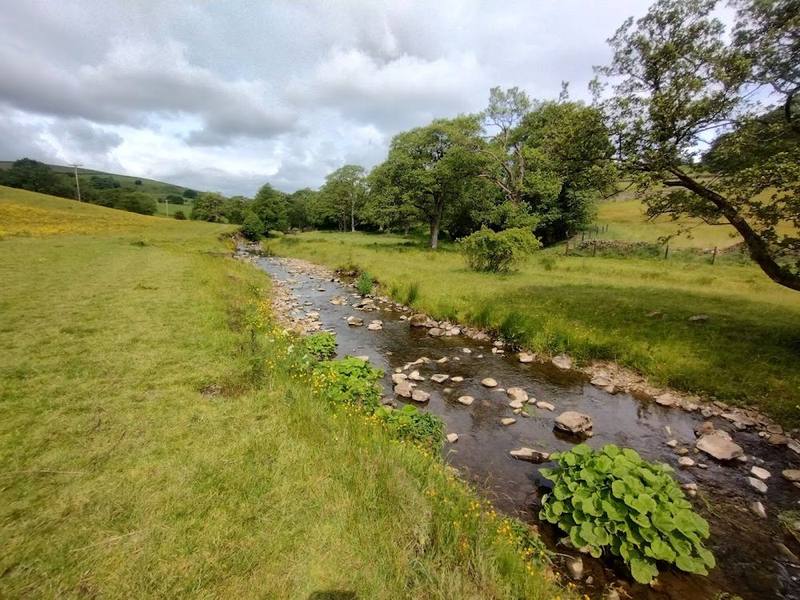
The Yorkshire Dales National Park covers a landscape of steep-sided limestone valleys — the "dales" that give the area its name — separated by high, open moorland and threaded with drystone walls and stone barns.
The best-known dales, Wensleydale and Swaledale, run roughly east-west and are dotted with small market towns and villages that still hold regular livestock markets. The Three Peaks — Whernside, Ingleborough and Pen-y-ghent — form a well-known 24-mile circular walking challenge, and the wider area is riddled with limestone features: cave systems, dry valleys, and exposed limestone pavement like the one above Malham Cove.
Malham itself, with its dramatic curved limestone cliff and Malham Tarn above, is one of the most-visited spots in the park, while further north Hawes is known for Wensleydale cheese, still made in the town. The Settle-Carlisle railway, one of Britain's most scenic rail lines, crosses the park via the Ribblehead Viaduct.
Where to Stay in the Yorkshire Dales
The Dales is a national park rather than a single town, so a hotel base usually means one of the market towns and villages around its edges. A few genuine options, spread across a couple of these:
- The Devonshire Arms Hotel, Bolton Abbey — a country house hotel and spa on the Bolton Abbey estate, near Skipton.
- Devonshire Fell Hotel, Burnsall — a smaller sister hotel to the Devonshire Arms, with views over Wharfedale.
- The Devonshire, Grassington — an inn on Grassington's main square, in the heart of the village.
- Dalesgate Hotel, Skipton — a family-run bed and breakfast hotel in the gateway town to the Dales.
- Simonstone Hall Hotel, Hawes — a former shooting lodge just outside Hawes, at the head of Wensleydale.
- Herriots Hotel, Skipton — a town-centre hotel on Broughton Road, a short walk from Skipton Castle and the canal.
- Rendezvous Hotel, Skipton — a hotel on the Keighley Road out of town, with an indoor pool, spa and gym.
- The Coniston Hotel and Country Estate — a country estate hotel at Coniston Cold, a few miles from Skipton, with indoor and outdoor pools and a spa.
- The Tempest Arms — a traditional coaching inn at Elslack, just outside Skipton, with free on-site parking.
Getting around
A car makes exploring the Dales considerably easier, though the Settle-Carlisle line and connecting bus services reach many of the main villages for those without one.