Whitby & the Coast
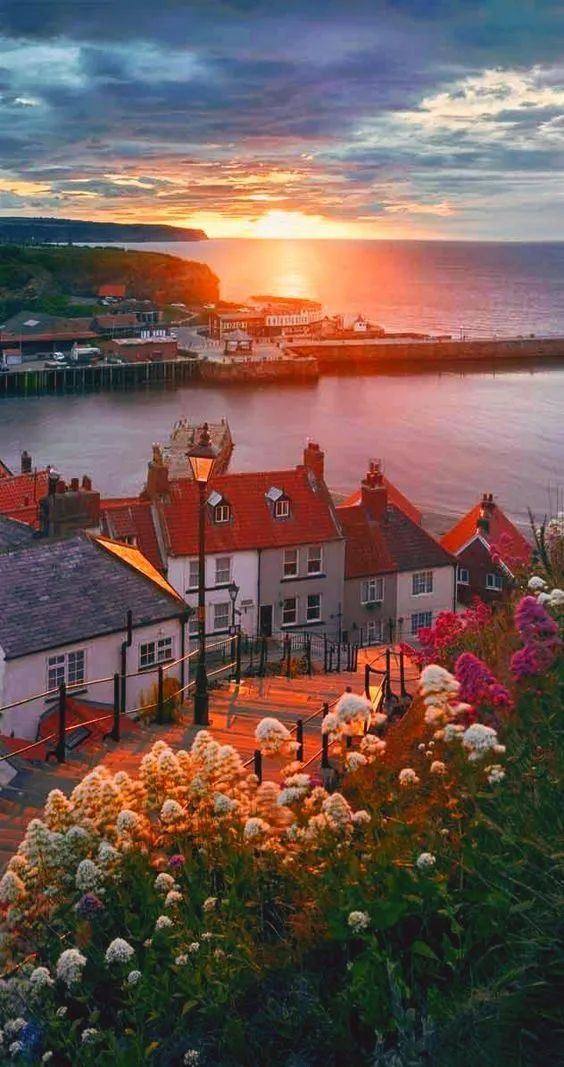
Whitby sits where the River Esk meets the North Sea, split into two by the water and dominated on one side by the ruined abbey on the clifftop above the old town.
Whitby Abbey's ruins date mainly from the 13th century, on a site with monastic origins going back to the 7th century, when an earlier abbey here hosted the Synod of Whitby in 664, a key moment in aligning the English church with Rome on the dating of Easter. The abbey's silhouette on the skyline famously inspired Bram Stoker to set part of Dracula in the town, and the 199 steps up from the old town to the abbey are a well-known local landmark in their own right.
Below, Whitby remains a working fishing harbour, and the town has a long connection to Captain James Cook, who served his apprenticeship here before his voyages of exploration — the Captain Cook Memorial Museum occupies the house where he lodged. The coast either side of Whitby, part of the North York Moors National Park, runs through smaller villages like Robin Hood's Bay and Staithes.
Where to Stay in Whitby
- Royal Whitby — the town's largest hotel, on the West Cliff overlooking the harbour and abbey.
- White Horse and Griffin — a 17th-century coaching inn on the East Cliff with past guests including Charles Dickens.
- Cliffemount Hotel — a clifftop hotel at Runswick Bay, a few miles up the coast from Whitby.
- Dunsley Hall Country House Hotel — a 19th-century manor house set in gardens a short drive from Whitby.
- Estbek House — a small hotel and restaurant in the coastal village of Sandsend, just north of Whitby.
-
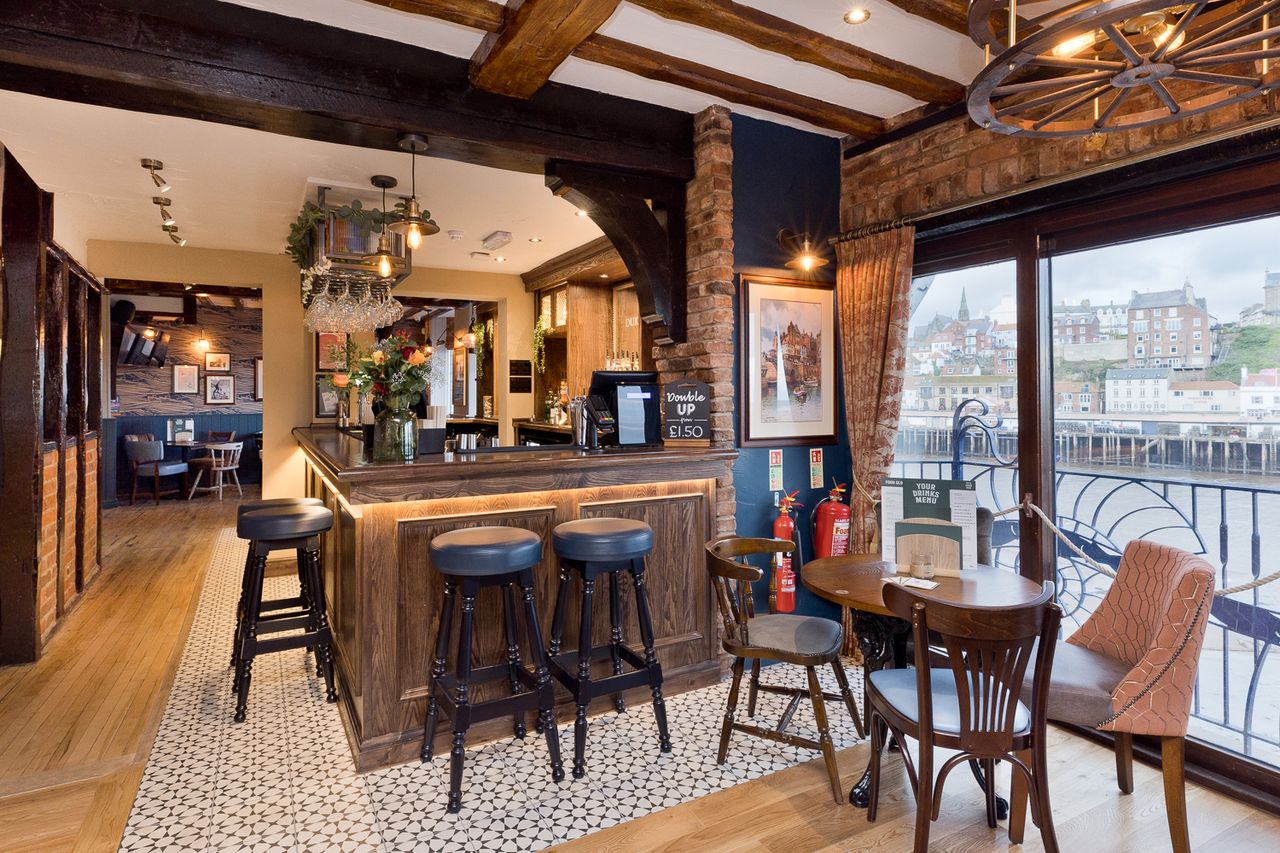 Duke of York — a harbourside pub-hotel on Church Street, right at the foot of the 199 steps up to the abbey.
 -
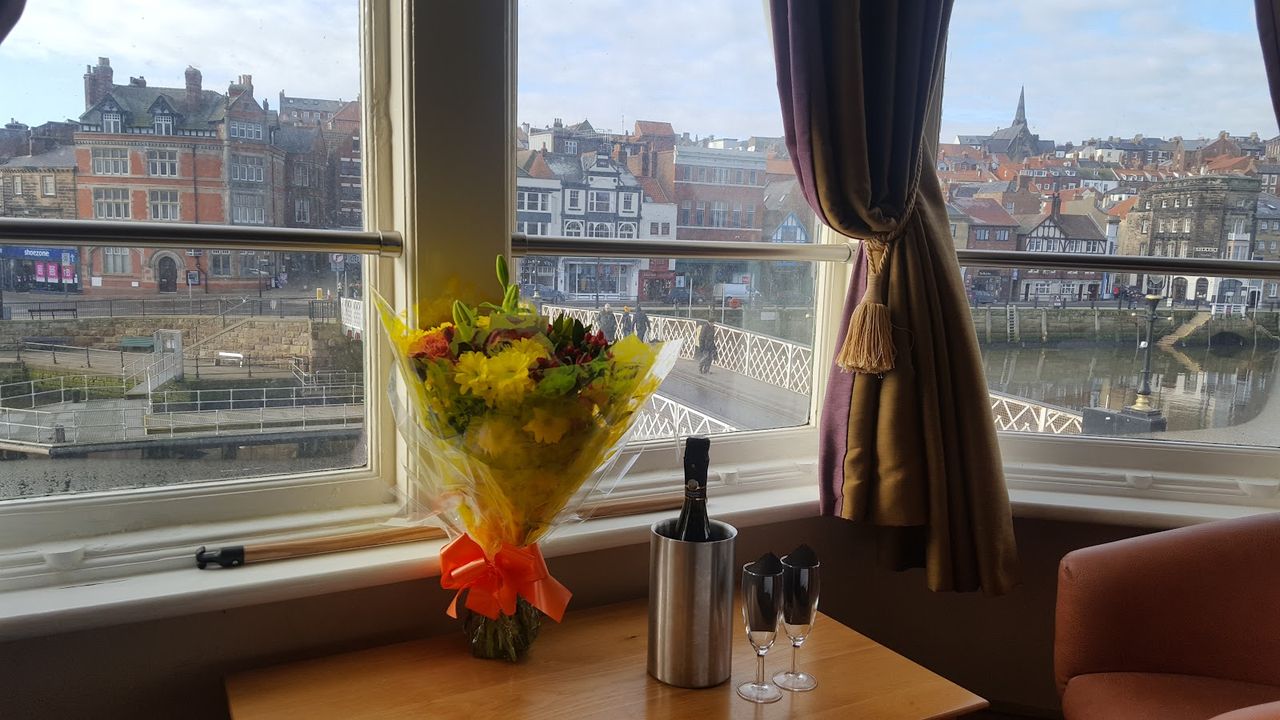 The Dolphin Hotel — on Bridge Street by the swing bridge, with the harbour and both sides of town within easy walking distance.
 -
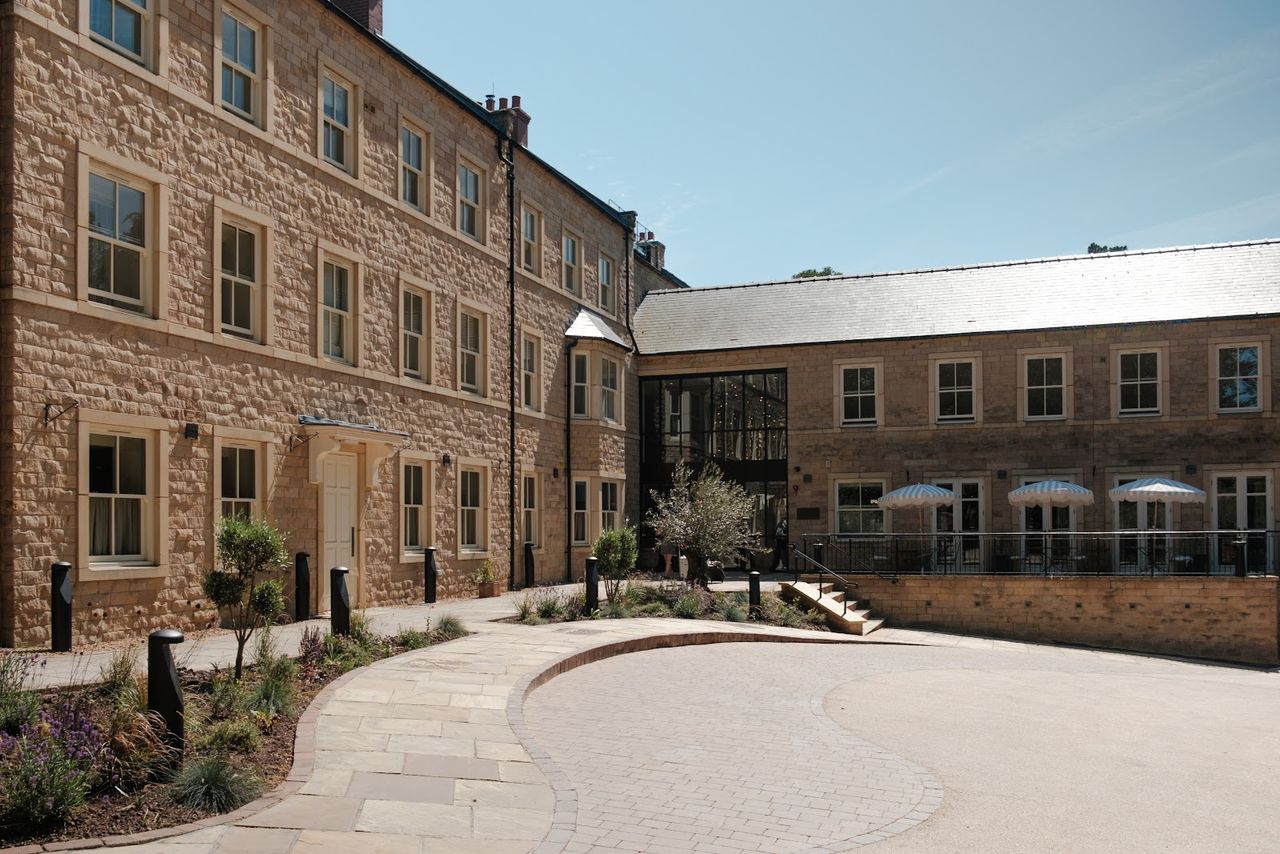 Saltmoore — a 5-star coastal hotel a short drive from Whitby, on the clifftop above Sandsend.
 -
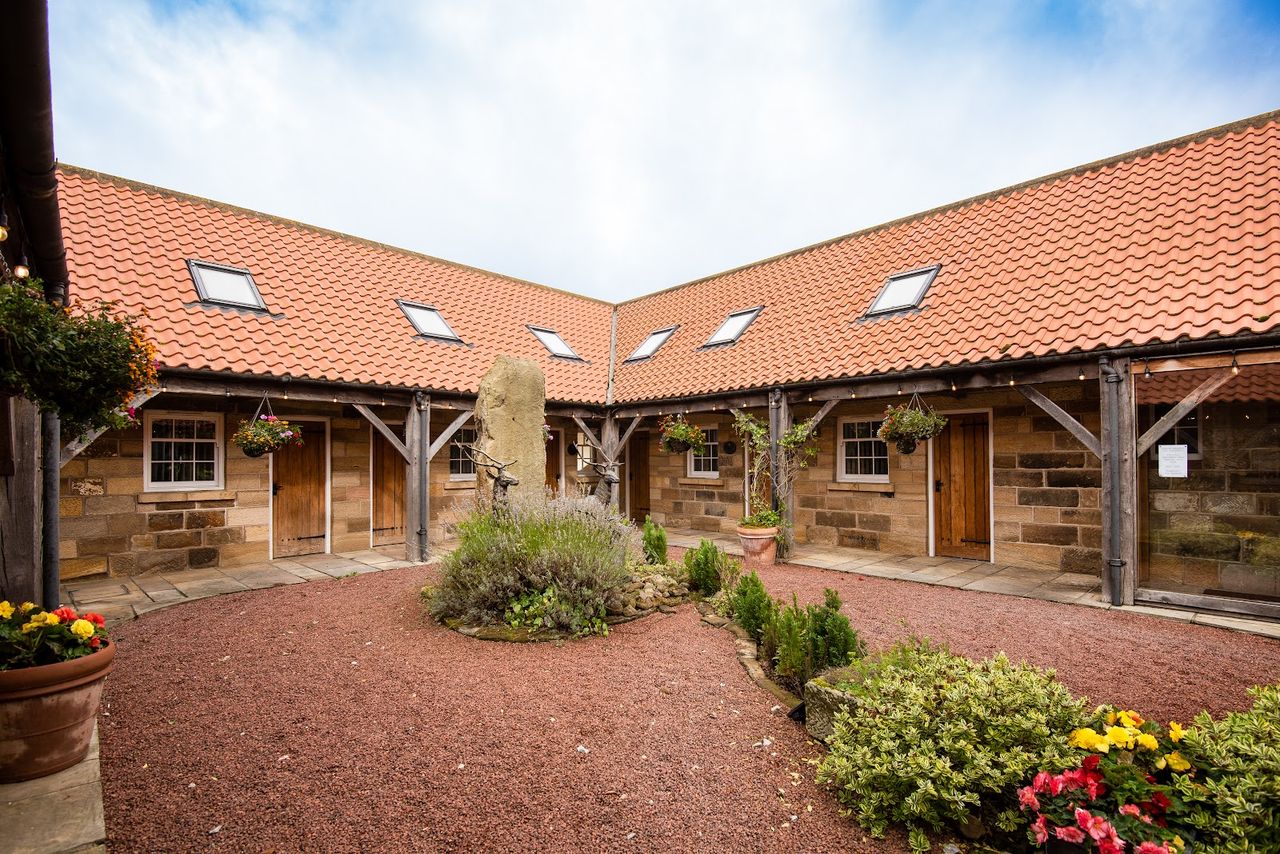 The Stables at Whitby — a converted stable block on the Guisborough Road out of town, with gardens and free on-site parking.
Robin Hood's Bay
A few miles south of Whitby, Robin Hood's Bay is a former smuggling village of steep, narrow lanes tumbling down to the sea, and a popular stop on longer walks along this stretch of coast.